Digital simplicity in inquiry-to-quotation: From process to impact

Innomotics transforms the global inquiry‑to‑quotation journey
At Innomotics, we are fundamentally rethinking the inquiry-to-quotation process, not as a local optimization, but as a global transformation.
The goal is clear: reduce complexity, increase speed, and create consistent customer experience across all regions. Patrick Christleven, Executive Director Promotion, Tools & Marketing (Digital CX & AI) for Low Voltage, shares how this transformation is evolving and what it means for sales today.
Why is an optimized inquiry-to-quotation process important?
Patrick Christleven: The inquiry-to-quotation process is one of the most critical levers for growth. It directly impacts conversion, margin and customer trust. And in many organizations, this is exactly where complexity has quietly accumulated over time. If we want to scale, we cannot just improve existing processes. We need to rethink how clarity is created in the first place.
What does the process look like today?
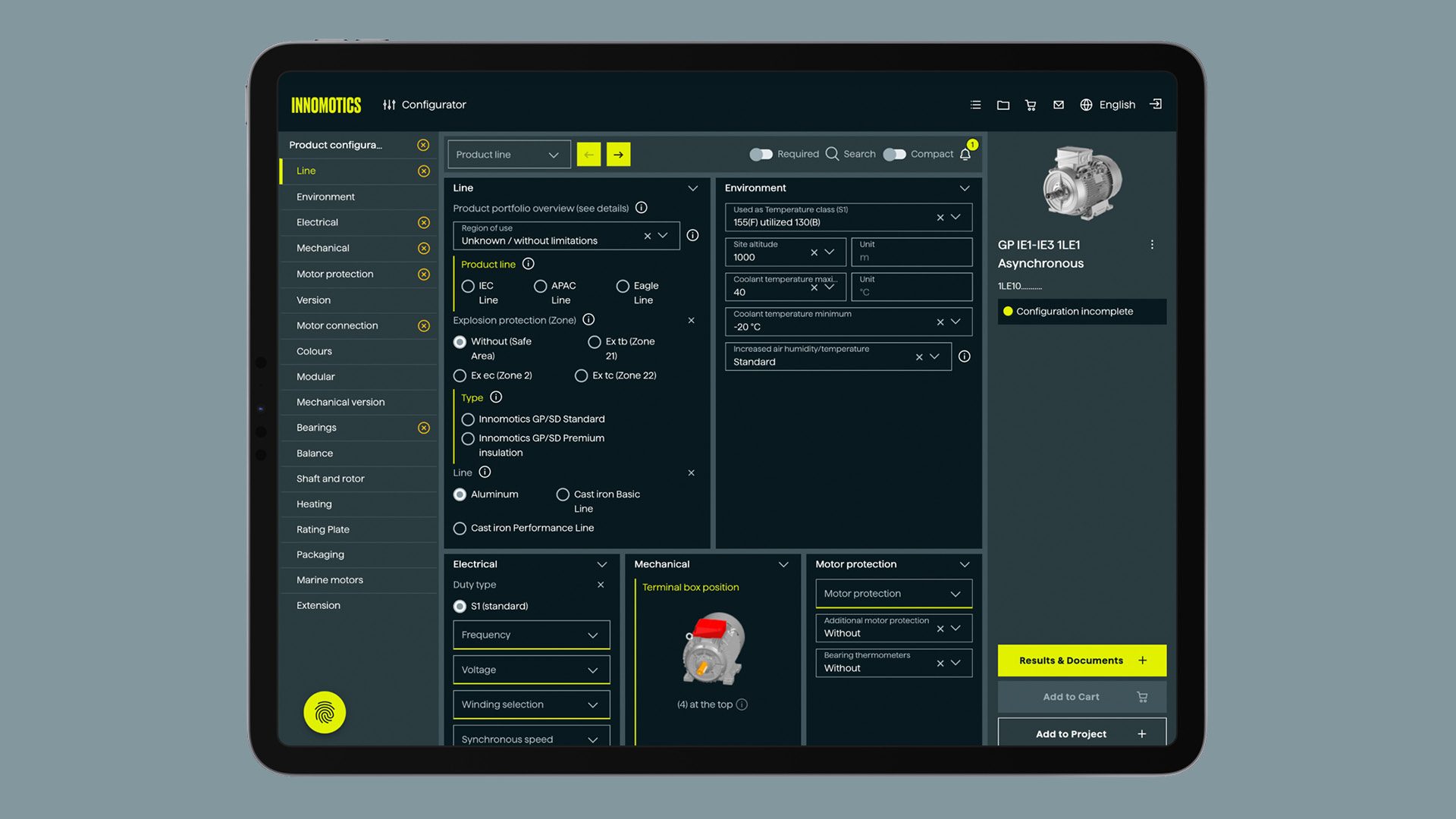
Patrick Christleven: Today, the process still follows a traditional structure: inquiry, clarification, engineering validation, pricing, approvals, and quotation. We already have strong elements in place, especially the configurator for standard cases. But complex MTO and engineering-driven requests still require manual alignment across multiple functions. Especially in these cases, speed is not limited by technology but by coordination. This is where time is lost.
Where are the main friction points?
Patrick Christleven: Most friction does not come from complexity itself but from a lack of clarity. Incomplete inquiries, missing data, inconsistent pricing logic, unclear approval paths. All of this creates loops, delays, and unnecessary coordination.And this is exactly what slows organizations down.
Which digital building blocks do we have and what’s next?
Patrick Christleven: We have already built a strong foundation with the configurator.
Now the focus is on connecting the system end-to-end:
- deeper CPQ integration
- a centralized data backbone for pricing and BOMs
- full CRM–ERP integration
- and scalable self-service capabilities for partners
Our aim is not to add more tools, but rather to build a unified system where every component works seamlessly together.
Rather than being the destination, AI accelerates the journey in this process. It helps us validate inquiries, suggest solutions based on real use cases, and optimize pricing within defined rules.
Patrick Christleven, Executive Director Promotion, Tools & Marketing (Digital CX & AI) for Low Voltage

What role does AI play?
Patrick Christleven: The real value of AI lies in how it reduces friction. As a result, we move faster, make sharper decisions and support sales in moments that matter. And ultimately, it becomes the bridge between operational efficiency and a richer, more seamless customer experience across the entire journey.
How far is the integration today?
Patrick Christleven: For many standard products, we already see automated flows from configurator to quotation. For more complex cases, we are building structured workflows and decision logic step by step. What truly matters is the direction we are heading which is toward a fully connected process.
Which KPIs should sales focus on?
Patrick Christleven: Speed, quality and consistency are the fundamentals. In addition, the metrics such as quote turnaround time, conversion rate, accuracy, and margin shape how we perform. Following this, the ultimate mission is reliable delivery, because that consistency is what builds trust.How will distributors be integrated?
Patrick Christleven: Real-time conditions, digital order handling, transparent status.This requires merging systems and creating a consistent experience across channels. Because for customers, it should feel like one system not many.
Who owns decisions and governance?
Patrick Christleven: Transformation is always cross-functional. Sales, engineering, purchasing and IT all play a role.
What matters most is clear ownership and shared direction. Because without that, complexity returns.
What does the future state look like?
Patrick Christleven: The vision is straightforward: an end to end process where inquiries are complete, data is accessible, and systems support decisions rather than slowing them down. A process where AI contributes exactly where it creates value, and where sales can focus on customers instead of coordination. Ultimately, it’s not about the systems themselves but about reducing complexity, creating clarity, and enabling real impact in everyday work for sales teams, partners, and customers alike.Read more in our Insights Magazine
Discover more insights and innovations in our related articles section. Explore additional stories that complement your reading and keep you moving forward with Innomotics.